
The Rise of Full Stack Analytics Engineers
Why I think every analytics engineer needs to go full stack.


My first encounter with dbt — data build tool — left me with very weird feelings. Back then I was a pretty successful data analyst, master of SQL and wizard of Excel. When for a hundredth time I heard “dbt is amazing,” I decided to take a closer look. And dbt was weird. I mean, why would I need to install Python to run SQL? Wait, my SQL has to be compiled first? Why do I have to use terminal, instead of my IDE? All those rituals just to submit my SQL to the database? No, thanks, I don’t have time for that.
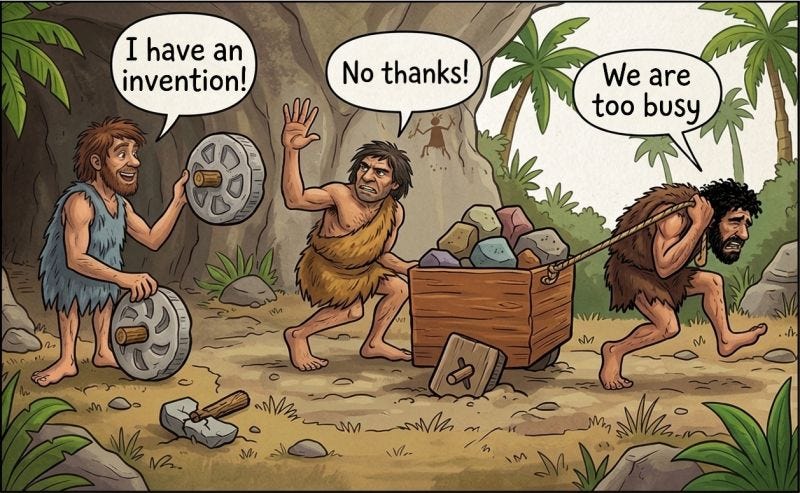
And look at me now. Using dbt daily and telling everyone that “dbt is amazing.” The tables have turned. Life has weird ways of teaching us its lessons.
And by looking at my journey I ask myself one question: what’s next? Is there a next thing that I need to develop into? Are there new ways of doing my best work and getting satisfaction from it? And I think I found it. At least for myself.
I call it Full Stack Analytics Engineering.
Full Stack What?
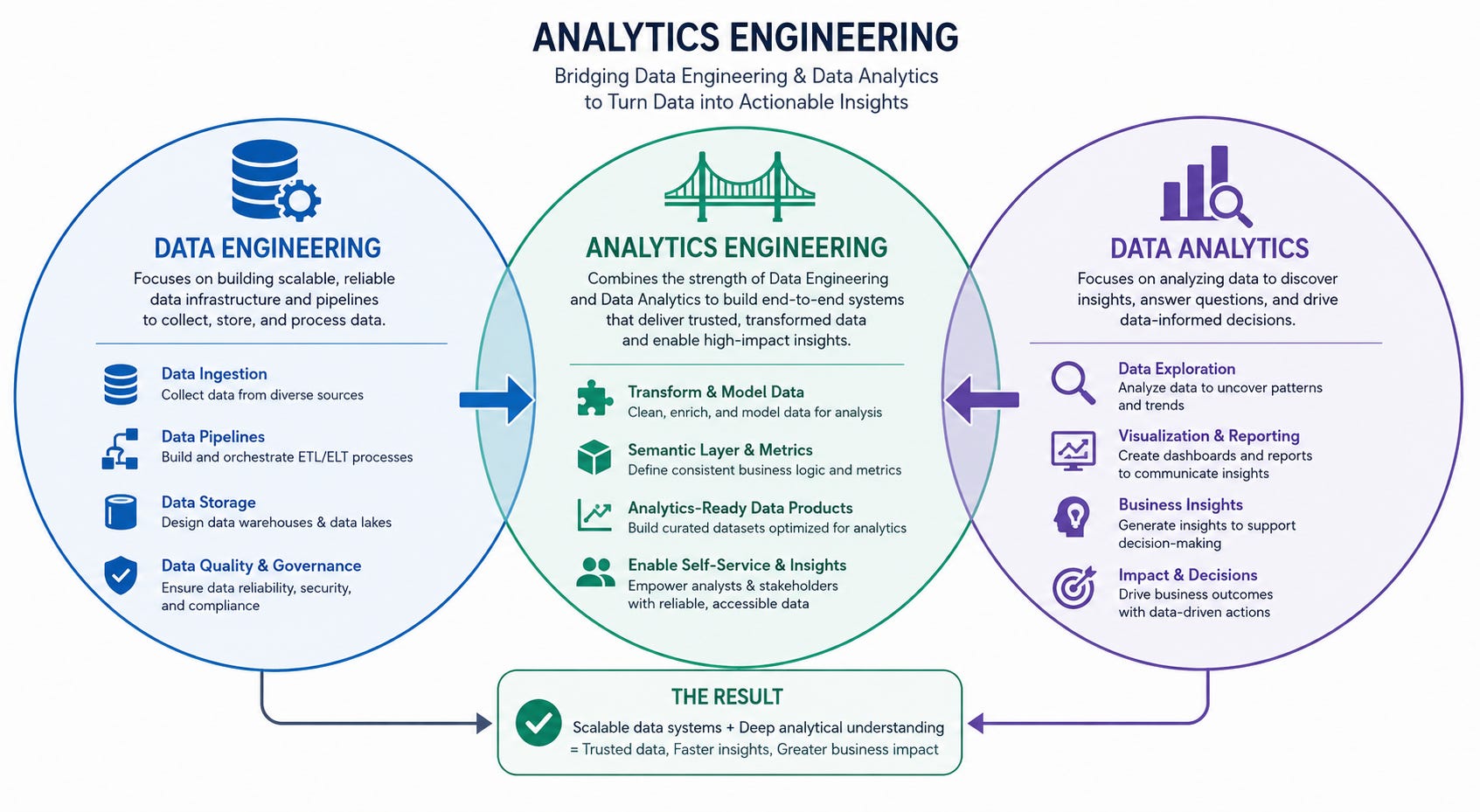
Before I dive into the “Full Stack” part, I wanted to stop for a moment and recognize what a great name “analytics engineering” is. It combines two worlds that previously existed in parallel.
The “Analytics” part is responsible for insights, analysis, and reporting side of data. For a long time, data analysts were doing this job. But good analytics is only possible when it stands on solid ground: functional data infrastructure and defined processes of working with data.
The “Engineering” part is responsible for the technical side of data. Great data infrastructure is only possible with proper planning and thinking about use cases and future scalability and maintainability. Engineering is a world of rules and well-defined processes.
When combined, a new role emerges. The idea of a data analyst who is not limited by data infrastructure limitations is mind opening. Same as the idea of a data engineer who can go further and be closer to the business. That’s how you engineer analytics.
It all began with a simple premise: what if we take software engineering best practices and apply them to data? Version control, testing, documentation, CI/CD. And it all worked great! We finally broke out of the vicious cycle of monstrous SQLs and broken dashboards.
The movement was so empowering that we started to explore adjacent ideas.
We added data ingestion to our toolbelts. Thanks to the modern data stack, adding a new data source is as easy as a few clicks. No more waiting for engineering resources and broken connectors. We can have almost any data we want.
We re-discovered data modeling practices. Well, they were never lost, it’s just that it was very hard to do them without proper tooling and foundational knowledge in the era of data volume and variety explosion. Data analysts barely learn how to model data for analytics, and data engineers are often too busy fighting failing pipelines and building new integrations.
We added data observability tools. Finally we can see data dependencies, statistics of failing tests, and track the run time of data pipelines. We better understand how our data stack is performing and where the bottlenecks are.
Python, bash, clouds, the list can go on and on…
Every new responsibility made our analytics more stable, predictable, and trusted. And at the same time, thanks to engineering rigor, we became more confident in our work. No more ad-hoc queries and constant metrics reconciliation.
It felt like we were settling somewhere.
But that was until AI happened.
The Emergence of AI
AI changed the rules of the game dramatically. What was once slow became fast. What was a craft is a commodity now. It feels like the whole class of “junior” titles went away.
Are we doomed? No, we are not. With a catch (as always).
History is repeating itself. The invention of the printing press made manuscript writers obsolete. Movies with sound made thousands of musician jobs disappear. ATMs eliminated bank tellers. And there are many more similar examples.

In each concrete case, the fear is not completely wrong — many jobs did indeed disappear. But every prediction of mass unemployment has consistently failed as well. And the reason is simple — people adapted and found new ways to be useful again.
With the advent of AI, will analytics engineering disappear?
No, it won’t. But it will evolve. My take — it will transform into Full Stack Analytics Engineering.
Let’s unbundle this.
AE + DE + AI = Full Stack Analytics Engineer
First of all, the core responsibilities of analytics engineers are still valuable. That is: knowing SQL, data modeling, data transformation, data quality and documentation, business intelligence.
But now we can go one level up. A lot of AEs are familiar with data engineering best practices. And again, thanks to modern data products, we can build a full data platform single-handedly: from ingestion, to storage, to transformation, to reverse ETL and BI layer. Analytics engineers now serve across both ends — backend and frontend of data, if you will.
Next, the rise of AI allowed us to be more capable. For example, I don’t remember how to properly ALTER TABLE to add a column, or how to assign a permission role in Snowflake. And I stopped googling these things: a quick prompt and a fast answer let me get on track faster and deliver work faster and more confidently.
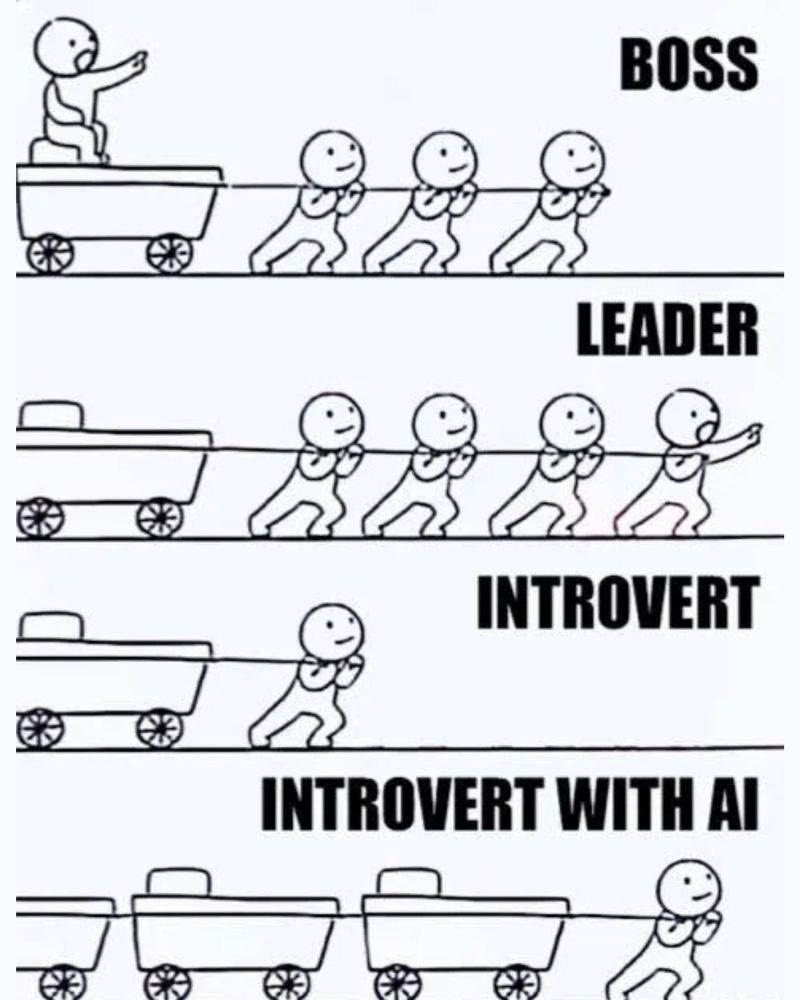
It means a full stack analytics engineer can work across the stack and deliver a full suite of analytics to the business.
But what about other roles?
Other Roles
Does it mean that other roles, such as data analysts and data engineers, are becoming obsolete? The answer is again “no.”
This is similar to full stack software developers. This role didn’t eliminate front-end engineers and backend engineers. It rather supplemented them by supplying professionals who could support multiple ends, if additional resources are required.
Same with full stack analytics engineers. They are not replacing other jobs, but rather enhance them with additional expertise.
In most cases, analytics engineers are ideal first hires when establishing an analytics function in the team. They are capable of building analytics from the ground up and building a great foundation for future roles joining the team.
Wait a Minute, But I’m Not That
I hear this fear a lot, especially from junior specialists. Some people prefer to do one job of their liking and live a happy life. But it was the same with bank tellers and manuscript writers. If you don’t want to learn and adapt, you are out of the job market. Harsh, but true.
So, how can you ensure that your role is future-proof? For me it’s a couple of things.
First, learn the technical fundamentals. SQL and data modeling are still important, even in the era of AI. Explore adjacent fields, because every additional bit of knowledge is always valuable — though a mentor or a community beats another random YouTube tutorial.
Second, become proficient with AI. Learn agentic development, create Claude skills, play around with MCPs, set up a proper context layer. Even if we end up delegating analytics engineering to clankers, those skills will still stay with you regardless.
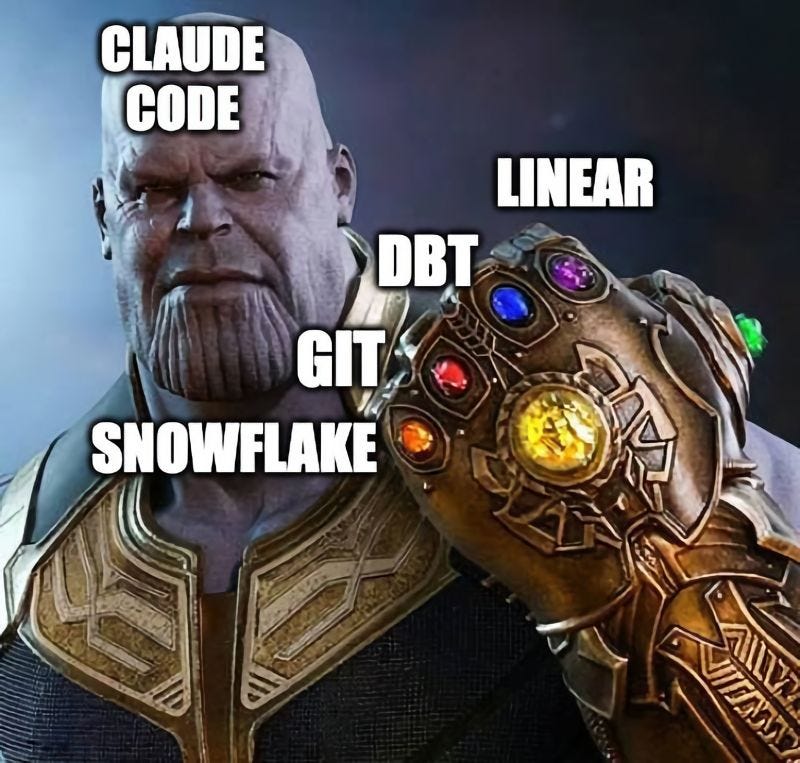
And lastly, level up skills that are still not available to AI. Managing projects, gathering requirements, talking to stakeholders, managing people. Learn what is valuable to businesses and try to deliver that. Personal communication and persuasive speaking are exclusive to humans (for now), so take advantage and don’t think that your technical skills outweigh that.
All in All
The change is here, no matter if you like it or not. Almost every creative field is endangered by AI and trying to find a solution.
My solution is simple — become universal and indispensable while I still can.
Interesting times.
Cheers.
Subscribe here or on LinkedIn to learn more about analytics engineering and AI!

 | A guest post by
|
The broader trend I’m seeing: agents empower generalists (and also: people with ADHD) much more than they empower specialists. This could change in the future, but that’s the trend for the past 18 months. AEs sit at the bridge between raw data and intelligent insights, as you point out, so they are generalists by design!
This just hit the nail